
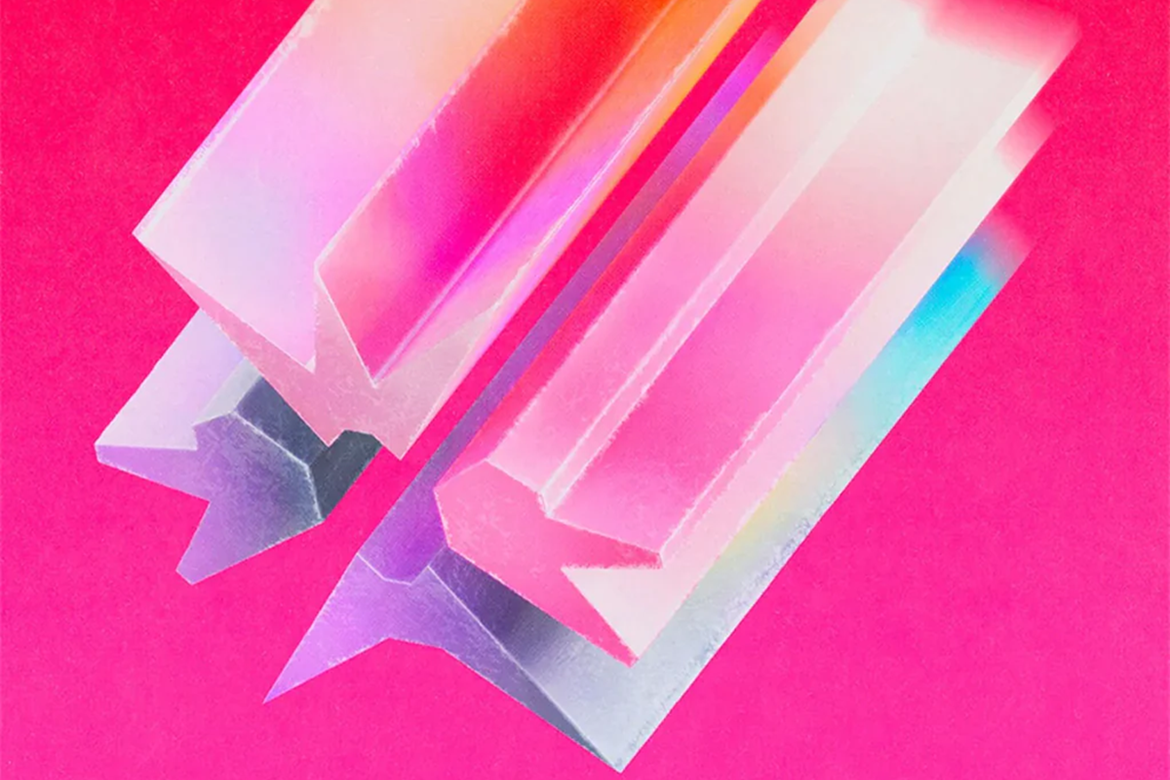
“Mirrored in perfect light, my mask reflects the mimic.”
Progressive metalcore titans ERRA return this year with their 7th studio album, silence outlives the earth. Two years since their last album, CURE, the Birmingham quintet seeks to yet again expand their iconic style even further. The past few years have seen the group reach new heights, solidifying their place as one of the genre’s top acts.
CURE showcased a different side of ERRA as they presented a more groove-oriented version of their sound. The subtler approach to their normally flamboyant style was a refreshing change of pace and a welcome development for the band. The age-old question of “Where will they go from here?” is always at the forefront of my mind when it comes to my speculations of ERRA’s next album.
Early last year, the band released “gore of being” and “echo sonata”, and the two singles gave us a glimpse into the direction for silence outlives the earth. The former launched us headfirst into familiar territory with a barrage of intricate riffs from the guitarist duo Jesse Cash and Clint Tustin. While I enjoyed CURE a lot, it was my hope that the more outwardly technical side of ERRA would return, and “gore of being” undoubtedly satisfies. Lead vocalist JT Cavey delivers his signature impassioned screamed vocals on the verses as the song’s lyrics wrestle with the idea of grief. The song, in Cash’s words, ended up becoming an elegy for Tustin’s father and a candid reflection on loss. Cash’s iconic vocals form the song’s soaring earworm of a chorus. Sonically, the song is a near-perfect blend of CURE and the band’s self-titled record, nailing the middle ground that I hoped the band could achieve.
“echo sonata” was one of the most pleasant of surprises, bringing back the band’s sound from their 2016 album, Drift. The album is iconic for its melodic and melancholic sound, with a heavy focus on intricate and emotive tapping riffs, qualities that “echo sonata” executes with finesse. Hearing this side of ERRA with a more modern and polished approach is a refreshing throwback to a beloved era of the band’s sound. It wistfully muses on the futilities of life, as was the theme of Drift, and the band demonstrates that their penchant for emotionally resonant lyrics is still very much intact. With these two singles, ERRA were confidently headed in a direction that I had hoped for after CURE, bringing more of their technical sensibilities back to the forefront while keeping the rich, deep atmosphere that they had perfected.
Album opener “stelliform” immediately brings ERRA’s progressive metalcore stylings into the spotlight. The sparkly intro leads that lead into their unmistakable grooves are immediately recognisable. The technical intricacies in the verse from Cash and Tustin pair excellently with Cavey’s vocals on the verses. The song’s chorus has Cash singing in a lower register, a very CURE-esque chorus that balances out the track nicely. Lyrically, “stelliform” looks at the cycle of hope and despair that often comes with this existence. The emotion of the track matches this theme excellently as it possesses a certain ruminative atmosphere. Its heavier moments burst with energy and are purposeful moments of release. The solo from Cash before the final chorus is just undeniably mesmerizing, and really ties the track together.
The album picks up the pace with “further eden”. The dense atmosphere carries forward in a dreamy haze. Following its impactful entrance, the verse strips back the guitars, giving a chance for bassist Connor Hesse and drummer Alex Ballew to shine. It starts to pick back up before diving into its chorus. Cash and Cavey join forces to deliver the track’s punchy chorus. It’s a strangely uplifting chorus given how bleak the lyrics are, lamenting about disconnection and its ties to technology. The breakdown right after the first chorus is tuned disgustingly low, springing an unexpectedly heavy twist on the track. Many would agree that the track’s highlight is its utterly ridiculous second breakdown, which sees Cash manipulate the sound of his guitar with an arrangement of harmonics and dissonance to create an almost alien-sounding riff. I can’t lie; I’ve missed such gratuitous guitar shenanigans from this band. Yet somehow, this doesn’t feel flamboyant for the sake of it and actually meshes well with the otherwise dreamy nature of the track.
You may be familiar with Ghost Atlas, Cash’s melodic alt-rock side project. It seems the influence of Ghost Atlas has bled into ERRA’s sound as they’ve experimented with elements of the sound on select songs on the last few albums. I think they’ve finally perfected it with “black cloud”. The track sees Cash take the lead vocally. Hesse provides a uniquely prominent bassline that sets the right foundations for the track’s floaty, melodic lead lines. Ballew’s drum patterns are still nuanced as ever despite the track’s lighter direction. The track’s chorus is ethereal in all aspects, from the chorus melody to the explosion of ambience that accompanies it. Like the comforting glow of an orange-hued sunset, there’s just something mesmerizing about its emotion. The way ERRA take on a more accessible style is still packed with an abundance of gorgeous lead lines and heavenly atmospheres. These qualities make “black cloud” such a fulfilling experience.
“cicada siren” is a particular highlight of the album. The aggressive, rhythmic chugs that are the anchor of the track bring to mind Volumes’ early sound. Perhaps producer Dan Braunstein had a hand in that influence, but it’s executed in a manner that ERRA makes their own. Ballew’s work on the kit, especially during the faster points, is precise as always. This track is a darker shift in the album’s emotion as it takes on a much bleaker tone. Cavey has his proper time in the spotlight here as he delivers the track’s chorus on top of his usual screamed vocals. It’s great to see his continued growth in vocal confidence on each album as he continues to vary the dynamics between him and Cash. The track possesses the groove-focused approach of CURE more prominently, but there’s a lot more technicality and grittiness to its approach. The subtle lead lines that punctuate the track establish a pensive mood that characterises the track. There’s a despair in its lyrics that paints a poignant and somber picture to match the sound of “cicada siren”.
There’s a uniquely gripping way that ERRA blends past and present sounds, and “lucid threshold” exemplifies that right in its opening minutes. The weighty crush of the downtuned chugs in its intro fades away into Drift-styled melodic lead lines in a display of contrast. The track, like “echo sonata”, has a sound inspired by Drift, but with the heavy atmosphere of CURE. The powerfully wistful chorus is somehow yet another strong offering in an album already packed with memorable hooks. There’s an unmistakably alluring yearning for escape captured by “lucid threshold” in both its sound and its lyrics. Where the track takes heavier strides, they hit even harder against its predominantly melodic approach. Drift has always had a special place in my heart, and it’s riveting how they’ve brought back this sound in a purposeful manner.
It’s at this juncture that I want to talk about the album’s flow so far. The heavy moments, such as on “cicada siren” or “further eden”, are undoubtedly memorable, but the album’s overarching sound so far is rather dreamlike. There’s a heavy emphasis on the immensely introspective atmosphere that permeates every track thus far. ERRA are no strangers to this more melodic approach; I’d argue it’s one of their strongest points. It’s executed with so much cohesiveness and consistency that I don’t find myself craving for a balls-to-the-wall heavy track.
Late album cut “spiral (of liminal infinity)” is the last stop before the album’s ending, and it continues in the dreamy sound of the album thus far. It takes a lot after Neon in its instrumentals, with Cash bringing in guitar work that’s heavily reminiscent of their 2018 album. The track yet again sees Cavey delivering more clean vocals, both on the chorus with Cash and on the verses. The bridge contains one of the prettiest solos of the album, with its tranquil harmonies breaking through the haziness. Lyrically, it contains a few references to older songs such as “Skyline” and “Safehaven”. (I glimpse the skyline bringing you closer // follow the search lights guiding us homeward to our safe haven)
In a move unprecedented for ERRA, the closer of silence outlives the earth is comprised of three parts. “i. the many names of god” sees the dream finally end as it finally awakens the beast that is JT Cavey. The darker shift that “cicada siren” alluded to takes full form here with a “Scorpion Hymn”-like heaviness to its aggressive chugs. Cavey goes unhinged with his gritty and despondent delivery of the song’s apocalyptic lyrics. Dissonant leads and prog-centric riffing throughout the track create the perfect sound for the cynical presence of “i. the many names of god”.
All this is, unbelievably, just a precursor to “ii. in the gut of the wolf”. Arguably the heaviest track on the album, it takes a more frantic tone and tempo. Where “i. the many names of god” was slow and brooding, there’s an urgency to “ii. in the gut of the wolf” that sets it apart. Cavey’s delivery is monstrous, bringing out menacingly low sing-screams that are very Gojira coded. It’s as though the dream has descended into a nightmare, and Cavey commands this presence with absolute purpose. The atmosphere of these two tracks is noticeably bleaker than anywhere else on the album, as it carries an ominous essence, one that’s contrastingly haunting as compared to the rest of the album before it. There’s something profoundly intriguing about how the album is structured, and these two parts being right at the end signify a collapse that feels extremely impactful. Cash delivers the final lines of the track as it ends on a mournful note. (into thin air // empty the oceans // silence outlives the earth)
This brings us to “iii. twilight in the reflection of dreams”. The album chooses to depart from the desolation in its final moments, akin to the quiet that follows after the conclusion of destruction. It could not be more obvious how much Tool inspires Cash’s playing style, as it is immediately apparent in its opening riffs. The track’s start is very different from its preceding two parts, with a much gentler tone. Cash sings of a profound despair as the track starts to build in intensity. The track is where the most progressive metal influence takes hold as it makes subtle changes to its time signature throughout the track. Hesse’s basslines are quite prominent as he helps to form the foundation for this track’s various elements. The ending lines of “ii. in the gut of the wolf” return here, but they’re delivered in a much more hopeful way. The track may start on a somber note lyrically, but as the track continues to build, it finds itself in a more sanguine place. The track finds its climax at the end as it erupts into a sublime ambience. The line, “I can’t feel what’s real”, is repeated throughout the track, but on its ending note, it finds a favourable conclusion: “I can feel it’s real // I can feel I’ve healed.”
There’s so much to take in on an album like silence outlives the earth, but it’s with full confidence that I can say that yet again, this is ERRA at their best. They’ve managed to take so much of their sound and condense it into a concise, yet extensive experience. Despite being one of ERRA’s shortest albums, it’s so full of detail that in no way does it feel unfulfilling. The album’s flow resembles emerging from a journey of searching and despair, only to find that there is hope after all. There’s a special way that ERRA remains relatable and vulnerable, even with their often vague and verbose lyrics.
In the modern metalcore scene, more and more bands are prone to offer progressively watered down versions of their sound. I’ve seen it happen to many genre giants in particular over the years. On the contrary, ERRA have managed to maintain their creative integrity over the years, especially since their self-titled album. Even with their differences in direction, you can immediately identify ERRA’s specific sound on these records. ERRA continues to go against convention and get stronger with each release. With all that they offer on silence outlives the earth, ERRA prove once more why they deserve their place as the colossus of progressive metalcore that they are.
10/10
silence outlives the earth releases on the 6th of March via UNFD. You can pre-order the album and merch here.