
“I’m a loose cannon with no means.”
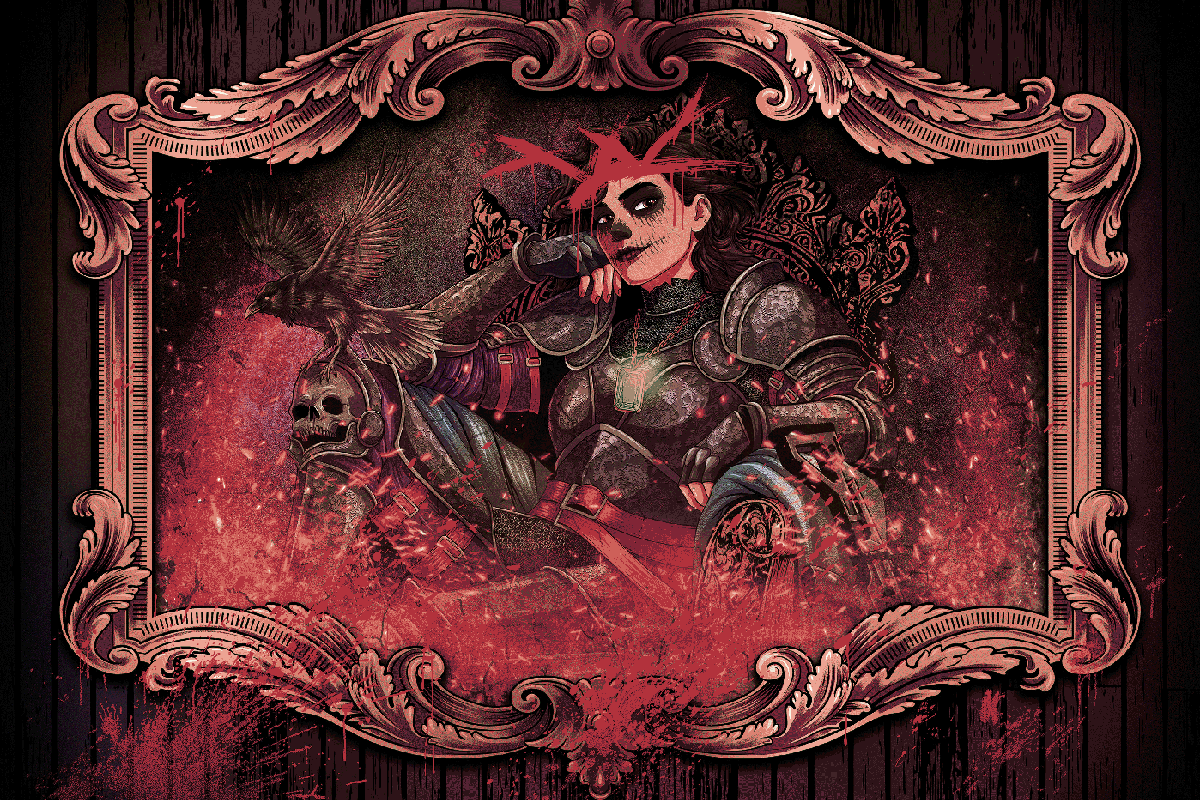
Self-branded as “Storytelling; Done the wrong way”, Melbourne’s The Gloom In The Corner is one of the more enigmatic bands to come from Australia’s metalcore scene. Leaning heavily into lore-based narratives, the band have a frenetic and unpredictable sound. They blend chaotically heavy moments with orchestral, cinematic moments across concept-driven albums. Vocalist and primary songwriter Mikey Arthur has a knack for changing between deranged screams and anthemic, cinematic singing with the flip of a switch. His charismatic delivery is a hallmark of Gloom’s sound.
The band’s previous album, Trinity, was an extensive experience that spanned close to an hour. It brought in a host of guest features that helped to play the various characters in the narrative. They seek to continue that story with Royal Discordance, with an ambitiously similar runtime. This is also the first album Gloom has released with its current lineup, with guitarist Jesse Abdurazak and drummer Joshua Clinch joining Arthur and bassist Paul Muisolino.
Opener “The Problem With Apocalyptic Tyranny” sets the tone with a ominous chant intro launching into an aggressive intro. Abdurazak and Clinch are a formidable duo as they lay down a gritty intro. Symphonic element in the verses are a hallmark of Gloom’s sound and provide an intriguing contrast against Arthur’s manic screams. The chorus opens up with subtle piano notes leading into an epic sounding chorus. The way the band alternates between the cinematic and the crushing is executed very well here, wrapping up an undeniably solid opener.
This quality of Gloom’s sound is displayed effectively across the entire album, albeit in a more streamlined manner than before. This is not to say they’ve become predictable by any means, but there’s a certain sense of sonic cohesiveness that comes with the more polished production. There was a certain grittiness that attached itself to Trinity’s sound that is noticeably cleaned up here, and I imagine that could be a point of contention for longtime fans. For what it’s worth, I think the new production style works in their favour. Tracks like “Painkiller Soliloquy” still retain Gloom’s iconic style. Pairing frantic blast beats with a soaring chorus, the track charges with an unhinged energy.
The theatrical elements to Gloom’s sound have always been something unique, and the tracks that lean into that are placed strategically throughout the album. Early album cut “Short Range Teleportation (A Guide To Guerilla Warfare)” maintains a certain suspense even in its relentless barrage of aggression. A choir-backed chorus creates a haunting atmosphere that brings the whole track together. “Nope (Hollow Point Elysium)” follows in a similar vein but opting for a filthy, chug-heavy screamed chorus. The verses pull away from the intensity, with Arthur’s menacing vocals morphing from spoken, to sung, to screamed within a matter of seconds. The references to classic cinema are not lost on me and are quite entertaining in a campy, yet charming manner.
I must say, however, “Shadow Rhapsody II” takes the cake as far as the theatrics go. The six-minute epic begins with a pensive piano intro as Arthur sings over the notes rather sorrowfully. Even when a burst of energy comes with an explosive riff section, the track retains its ballad-like nature as it gradually increases in intensity. It’s grandiose, the way “Shadow Rhapsody II” flamboyantly presents itself.
There are moments on the album where Gloom takes a more straightforwardly rock-influenced style, and they are an interesting change of pace. Arthur’s singing ability is frankly excellent and he has the chops to pull these off. “Angel’s Wrath Whisky” is a great example of this, with its energetic delivery and still matches the overall momentum of the album. “That’s Life (Carry Me Home)” has a certain Motionless In White feel to both its instrumentals and vocal delivery that I am quite a fan of. I must admit there are points where it leans a little too safe, such as on “You Didn’t Like Me Then (You Wouldn’t Like Me Now)” where the execution feels less effective. Even so, it doesn’t actively detract from the fun of the album.
It wouldn’t be a Gloom album without a proper serving of ass beaters, and “Assassination Run” is the man for the job. Its perilous intro almost sounds like a warning for the barrage of angry chugs that follow. The track rages with a demented momentum that ultimately finds explosive release with its destructive breakdown. It’s genuinely rather impressive how well Gloom are able to handle both extremes of their style as “Assassination Run” hits with an undeniable force.
Admittedly, I struggle to follow lore when it comes to music. I haven’t even read our (in)famous Sleep Token lore article. A commendable quality of Royal Discordance, and Gloom’s music as a whole, is that it’s very much still engaging and entertaining. A particular highlight comes in the form of “Army Of Darkness”. The late album cut is a personal favourite, condensing the iconic elements of Gloom’s sound on this album into a tight package. There’s a solemnly haunting quality to it, contrasting the angrier or more whimsical moments of the album. An impressive solo from Abrurazak makes an appearance mid-track which is a satisfying injection of melody. The track’s crushing end breakdown sees Adurazak with more to offer as a second, shorter solo directly contrasts the cataclysmic chugs. All this is to say, there’s still a great deal to enjoy here, even if you do not avidly follow Gloom’s lore.
The album’s two part closer demonstrates that the art of an effective ending number is not lost on Royal Discordance. “Love I: A Quaver Through the Pale” pulls the intensity back fully, with a piano and strings-led instrumental to match Arthur’s emotional delivery. The track builds into a anthemic rock climax that really encapsulates how well Gloom can pull off the dramatic. “Love II: A Walk Amongst the Poppy Fields” keeps that high going, with a properly cinematic and extravagant display of atmosphere and emotion. The ending of this album feels fulfilling and gives the album a sense of completeness in the way of a proper send-off.
Succinctly put, Royal Discordance is a great deal of fun. It’s hard to deny that The Gloom In The Corner put on a great show, and this album is filled with an abundance of entertaining moments. Campy at times? Perhaps, but it’s not an album that insists on being taken seriously. I’m sure the lore heads will have a good time digging into the details of the lyrics and the story that I may never fully comprehend in this lifetime.
I would be remiss to mention the specific charm that Trinity had; it was over-the-top and raw, and some of that is lost here. It’s a give-and-take, as while Royal Discordance doesn’t operate with the same unruliness, it offers a more cohesive take that’s more accessible while still retaining a lot of what makes Gloom unique. In the end, the album manages to justify its extensive runtime, solidifying it as yet another welcome addition to this band’s intriguing discography.
8/10
Royal Discordance releases on the 27th of February via SharpTone Records. Pre-order and merch links for the album can be found here.