
“Lightning tears the sky.”
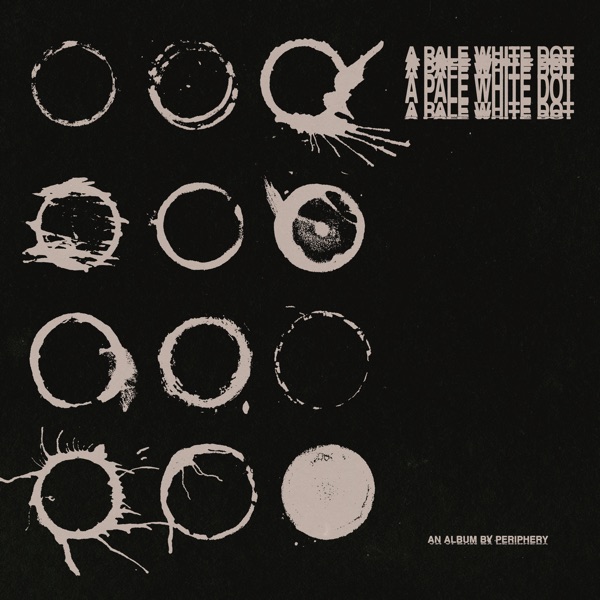
In a year that seems endlessly stacked with major releases, progressive metalcore juggernauts Periphery are set to make a return as well. The Marlyand group have been an iconic force in progressive metalcore and djent. Their latest offering, A Pale White Dot, sees the band them pushing the band’s boundaries in many ways. For starters, it’s the first Periphery album since the Juggernaut series to drop the “Periphery X” naming convention. It’s also been a good while since there was a Periphery album under an hour, and the songwriting choices here reflect this push for a more accessible version of their sound.
Indeed, the longest track on the album clocks in at 5 minutes long. This is quite unusual for a band that historically crafts progressive metal pieces, usually spanning over 10 minutes. On A Pale White Dot, Periphery have condensed the main parts of their sound into a much more digestible package; a move that feels like the opposite of what they did on Periphery V: Djent Is Not A Genre. There’s a particular focus on chorus hooks and straightforwardly heavy moments that still feel authentically them, and also just being of their usual excellent quality for the most part.
One of this album’s highlights is its abundance of properly heavy moments. It’s intriguing to hear Periphery go for this direction; they’re no stranger to this, but there’s a greater volume of aggressive moments here than on previous albums. First single “Mr God” was indicative of this direction, being one of the band’s shortest tracks. The track features no clean vocals and focuses heavily on pummelling djent rhythms and eerie leads to create an ominous atmosphere. The track overall leans much heavier into the metalcore side of their sound, ending on a gnarly breakdown. Vocalist Spencer Sotelo once again displays his extensive scream range throughout the track with ease.
Album opener “Obsession” starts on a deceptively gentle note, with a suspenseful synth intro paired with Sotelo’s iconically smooth vocals. There’s an abrupt switch-up into a sinister combination of eerie tremolo riffs and blast beats. The track ebbs and flows between its floaty verses and the almost deathcore-esque sections. Drummer Matt Halpern lays down precision on the kit throughout the track. The track ends on a melodic chorus of sorts, bringing that classic Periphery style with its djenty rhythms. It concludes on a crushing, downtuned breakdown, and I can’t deny just how entertaining they make these heavy sections.
The longest track on the album comes near the start with “Talk”. Picking up the tempo, the weighty chugs in the verses are satisfyingly down-tuned, with flurries of riffs and leads sprinkled throughout. The iconic triple guitarist combo of Misha Mansoor, Mark Holcomb, and Jake Bowen show that their artistry is far from lost. The speedy mid-track solo fits in surprisingly well with the heavier direction of the track. The chorus ties it all together, with Sotelo’s soaring vocals creating for yet another memorable hook.
The heavier side of the album finds its climax with “Subhuman”. With its bass-heavy tunings, the low-end is immediately dominated with an ominous presence. Sotelo’s vocals are more unhinged than ever, channelling the performance he gave on tracks like “Reptile” into his feral growls. The apocalyptically low chugs lead into a feature from Will Ramos of Lorna Shore. The slowdown that accompanies his deranged vocals is undeniably filthy, and it cements “Subman” as one of Periphery’s heaviest tracks to date.
On the flip side, the album also features some extremely strong melodic cuts. “Heaven on High” is a prime example of this, with its uplifting main riff courtesy of Holcomb immediately creating an impression. Sotelo makes use of his soaring vocals to fit into this euphoric direction perfectly, with the chorus easily becoming one of my favourites on the album. The track’s solo leans heavily on their melodic side as it blends its harmonies delectably. The track’s climax comes with its unexpectedly crushing breakdown, filled with dissonant chugs and an eerie ambience that somehow fits seamlessly with the otherwise inspiriting nature of the track. “Heaven on High” is without a doubt one of my highlights on this album and is a testament to Periphery’s range.
The album’s other melodic cuts include tracks like “Unlocking” and “Neon Valley”, both making use of synth-laced djenty soundscapes effectively. “Neon Valley” in particular is one of the other longer tracks on the album, taking its time to slowly build in melodic layers that culminate in another blast beat section, albeit one that’s more melancholic than evil. Other tracks like “Malevolent” and “Carry On” go in a heavier direction. The former in particular takes a more technical slant, while the former uses its chaotically dissonant heavy sections like drops on an EDM track. There’s a satisfying amount of variety on the album that results in an engaging experience.
There’s a certain familiarity to these songs; you can definitely recognise them as Periphery. However, there is this sense that they’re intentionally holding back and sticking to structures and writing choices that are more accessible. It’s definitely an ambitious gamble for the group who are normally known for their technically complex pieces. Although some tracks stick the landing better than others, it’s a bet that pays off overall as it successfully presents a different, more approachable side of Periphery. There is a point in the middle of the album that feels rather puzzling with “Blackwall”. A fully electronics-driven track, it mainly features Sotelo’s vocals over a synthwave beat. It feels like an interlude, except it goes on for 4 minutes. While not a bad track in isolation, it doesn’t quite fit the album as well as the other songs on the album and it doesn’t really go anywhere. While I’m all for bands experimenting, this is one the album probably could have done without in my opinion.
The album concludes with “Everyone Dies Alone”, followed by its title track. Although I was initially not convinced by “Everyone Dies Alone” as a single, I find that it fits much better in the context of the album. There was this feeling that it was holding back something, but in retrospect, its more straightforward approach ends up fitting the album experience better, especially with how the album pushes the extremes a fair bit throughout its runtime. The album makes an interesting choice by concluding on an instrumental acoustic track for its title track. Undoubtedly, it is a very well written track as it features the intricate melodies of the band’s guitarists on full display. It’s somewhat of an unusual ending for a Periphery album, as they normally tend to end on a cinematic high note. As it is, I am on the fence about this closer choice, but it’s certainly not a bad track by any means.
As mentioned earlier, A Pale White Dot is ambitious for different reasons. This is perhaps Periphery’s most accessible record, with its focus on more conventional aspects of modern metalcore’s sound like chorus hooks and unrelentingly heavy moments. This is far from a detriment, however, because of how well the band have executed this vision, as the tracks on the album are still very much packed with their signature intricacies and rhythmic oddities. Although the album has somewhat of a strange and at points, unnatural flow, it’s still nonetheless a satisfying experience and an excellent display of Periphery’s range and abilities in a more digestible form. Those who expected an indulgently technical experience from Periphery may be disappointed, but I find there’s plenty of merit to the approach they took with A Pale White Dot.