
“Waiting for the sound, crashing to the ground.”
To those who were raised on post rock’s rag-tag blogging scene of the 00s, Hammock’s early work was inescapable for good reason. 2005’s Kenotic became the poster child for the genre’s most laid back style, blurring that sweet line between bliss and melancholy. It feels as though we’ve collectively blinked, and the two-man project has created twenty one albums is as many years. If you’ve kept up, you’ve had a dependable companion growing alongside you, providing a touchstone that’s stayed true to its fundamental premise.
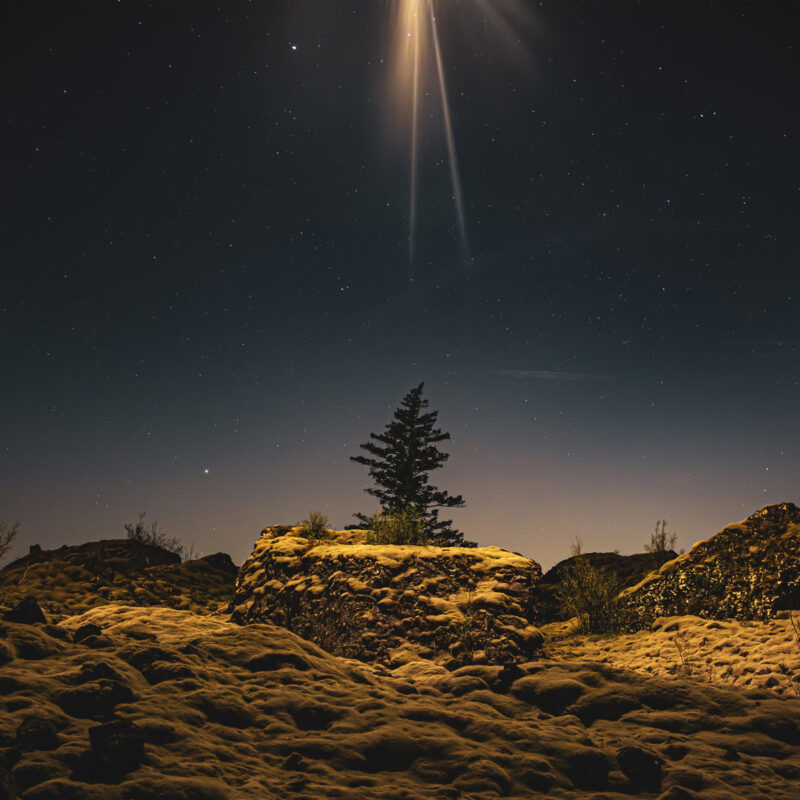
As Hammock’s twenty-first album arrives, it comes with no sense of urgency. Certainly not sonically – Hammock are the antithesis of urgency – but also culturally. There are few new ideas being added to the conversation around post rock in 2026, a fact that has always felt amiss in a genre where the rules should be loose. Mono, We Lost The Sea, Sigur Rós, and even Godspeed You! Black Emperor are still sounding like it’s 2005, give or take your preference on production style. A few acts are cutting through this, such as BRUIT ≤, Outlander, and Overhead, The Albatross, but it seems as though the opportunities lie in genre fusion rather than challenging the fundamentals. This matters on the macro-scale for the genre and haunts much online discussion of the genre, even dating back to 2008 when the patterns around creshendoism began to be noticed. But on the scale of individual artists and records, this debate can and should be set aside. The Second Coming Was a Moonrise is Hammock in their own lane, painting in colours that are as vibrant as ever.
It’s been under a year since 2025’s Nevertheless. This was a rather different endeavour for the band made from almost pure guitar-based ambience, capturing Marc Byrd and Andrew Thompson in duet. The Second Coming Was a Moonrise now takes us back to Hammock’s ‘full’, traditional sound. It’s helpful to split this new record between its instrumentals and vocal tracks, as the band are highly respected for both styles. They start with the former as “Inbreaking” begins proceedings with the most gentle guitar swells. The mixing taunts you into adjusting your volume upwards, only to be pushed back down by the distorted kicks and wall of sound that builds up. Perhaps this structure will not impress those who have heard a crescendo or two in their time, but it’s a good example of the record’s dual purpose: to soothe, yet also gently crush.
Hammock‘s core sound has always been defined by the balance in the guitars, usually with two key voices present. One is typically played largely clean, a few overdubs here and there to ring out chords, but largely under-layered compared to one’s expectations for the genre. The other guitar is a pure drone, sent through an effect chain that stops off at the pearly gates. Think Stars of the Lid, especially for the way that it mimics an entire string section working in blurred unison. Whatever mix of pedals makes this crooning sound, it’s fantastic that Hammock have made it their home since the beginning.
Some of the most powerful tracks are the long instrumentals. “The Unsetting Sun” is steady for its first half, falling away just to drums for the record’s second crescendo, replete with starry synths. It’s no surprise it was picked for one of the record’s singles, despite being wordless. The record’s true epic is “The Second Coming Was A Moonrise”, bringing everything that Hammock do into one place – swells, strings, soft strums, and steady beats, also finding a summit of intensity to beam us up to. The real draw is the extended outro, gracefully mirroring the way the piece begins. Closer “All the Pain You Can’t Explain” is built on a less-is-more guitar pattern, harkening towards powerful pieces by This Will Destroy You (and the heavy outro certainly makes that comparison even more potent). The niceties of these tracks may pass you by as you spin the record in order, so it’s worth taking a few of these out of that context, perhaps putting them on repeat to soak them in as your favourites.
A few tracks toe the line between instrumental and vocal. “Deconstructing” puts the human voice through such heavy effects that they almost sink below the sonic horizon, and “Sadness” is fully voice-as-instrument. These are nice pieces, but they somewhat melt away into Hammock‘s huge catalogue. There are only a few truly vocal pieces on the album, which pick up the groove of classic shoegaze acts like Slowdive. “Chemicals Make You Small” is a heady piece full of strings, sung as if each intake is one of pure helium. A surprise bit of ‘star power’ comes from The Flaming Lips, with Wayne Coyne adding vocals and Steven Drozd adding to the keyboard soundscapes. Hammock aren’t really trying to be catchy here, but the track does offer a few hooks among the reactive riffs that ebb and flow, and sway of the vocals. “Like Sinking Stars” is rhythmically focused, pushing the guitars way down and setting down a groove worthy of some toe tapping. These two tracks certainly some of the album’s highlights, and along with tracks like “The Unsetting Sun” and “The Second Coming Was A Moonrise”, there are plenty of memorable moments amid the pleasant ambience.
Hammock still remain compelling after so many years. It’s tough to call The Second Coming Was a Moonrise essential, as it offers an unchallenging sound and lacks surprises in its structure. But if you give it the focus it deserves, it is so easy to put on and become gently engulfed, especially when you weigh its individual tracks and go hunting for your favourites. Innovation in post rock and dream pop is hard to come by, but genre is also a practice; there’s much to be admired in iteration, even if its rule book is not being inverted. Hammock are to be commended for being so dependable all these years, reliably on hand to crystallise the beauty of each present moment.