
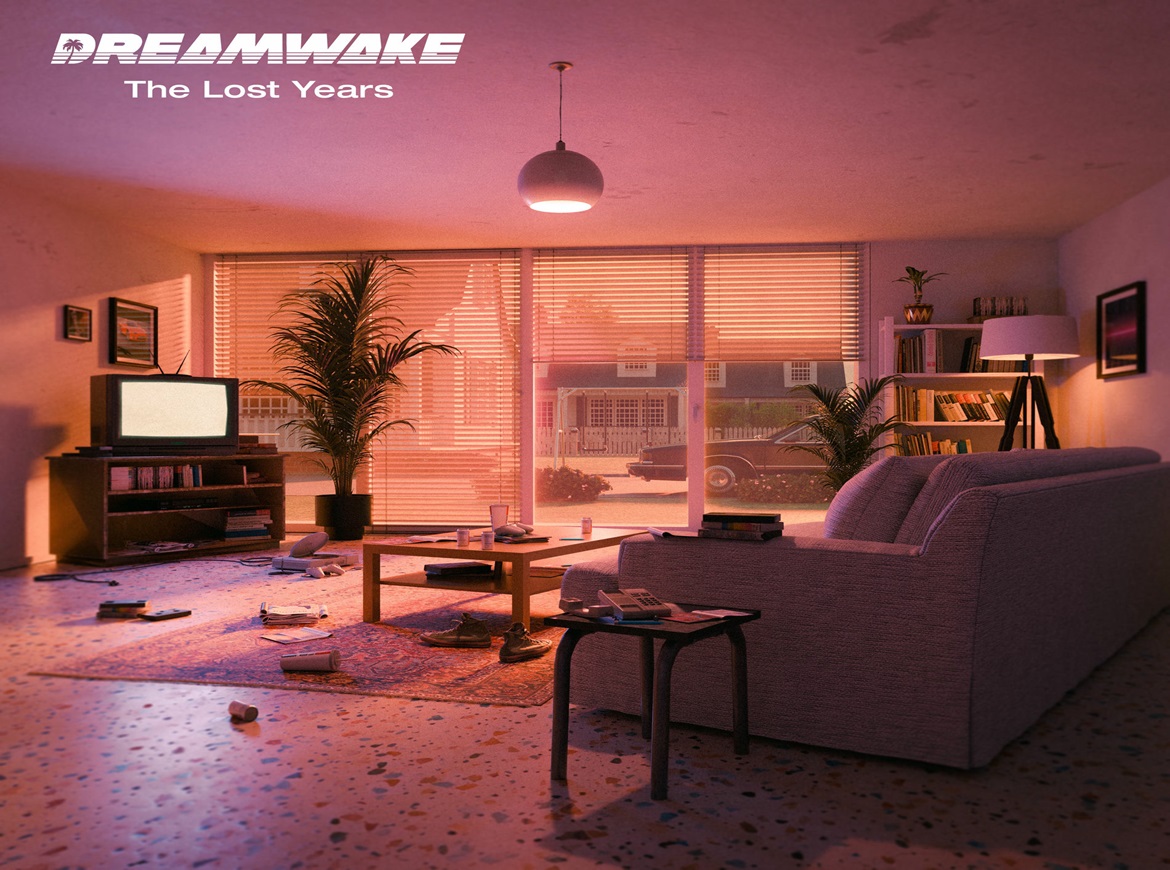
“Hold the weight of my mistakes and take my hand.”
Bands with unique niches have always piqued my interest, increasingly so in recent years where more and more bands emerge as mere copies of other more established bands. It feels harder by the day to land on a sound that truly distinguishes you from the rest. Connecticut’s Dreamwake is one band that has managed to break the mould and entice my ears.
Since the release of their first album Virtual Reality in 2022, the band have captured my attention with their combination of intricately detailed progressive metalcore and synthwave. Dubbed by the band as “wavecore”, the band’s sound blends the nostalgic and melancholic atmospheres of synthwave with guitar work that rivals that of old NOVELISTS’ music, courtesy of guitarist Dave Pazik. A style that few other bands play, Dreamwake quickly became a recurring presence on my radar with the captivating nature of their style. To say I am excited for their label debut album, The Lost Years, is a massive understatement.
Giving us more Dreamwake than ever before, The Lost Years boasts a hefty runtime that’s close to an hour long. It is reasonable to wonder if there is enough within the band’s niche sound to substantiate the 56 minutes that the album is contained within. It’s a bold choice that is undoubtedly tricky to pull off, especially in an era that favours shorter songs and albums.
In its opening third, the album starts on a strong note. The epic 5-minute opening track “Stargazer” sets the stage for the entire record. Dreamy synths lay the backdrop for saxophonist Jesse Molloy, casting a nostalgic cloud over the track. Molloy, although not being a member of Dreamwake, contributes extensively to The Lost Years, with his saxophone parts showing up in almost all of the songs. He’s a fitting choice, seeing that he has worked with and toured with synthwave giants The Midnight. The synthwave band are most definitely influences on Dreamwake’s sound, as their synthwave soundscapes pull heavily from this influence. Pazik and drummer Andrew Popolizio join the fray without interrupting the vibe, with Pazik’s signature technical riffing and Popoilizio’s drum rhythms adding to the atmosphere. Vocalist Bobby Nabors brings his blend of smooth, soaring cleans and intense screams to the mix. From cathartic breakdowns to more of Molloy’s artful playing, “Stargazer” impressively holds onto its overarching emotion and ambience, with all the elements of the song fitting in nicely. With uplifting lyrics about chasing destiny amidst the chaos, the album’s opening number is a hopeful one.
“Daydream” showcases Pazik’s endless creativity with a highly technical opening riff. The track takes a slightly heavier shift while still keeping the dreamy ambience set by “Stargazer”. Nabors demonstrates his ability to deliver an effective chorus hook over and over throughout the album, and here is no exception. The track overall is a fairly expected offering from Dreamwake, but this is far from a negative point. The standard of the band’s songwriting is undeniably much higher than many of their contemporaries.
Slowing the album’s pace, “Dark Eternal” takes a more poignant and melancholic approach as it reflects on persevering through mental health challenges. The track’s middle takes a dark twist with an eerie synth in the background of a cathartic heavier section, with Nabors displaying his impressive range with his harsh vocals. The track’s closing sees a dual solo from Pazik and Molloy before a final chorus, truly holding nothing back with the album’s compositional details.
Fourth track and first single “Memories” was the first glimpse into the album’s sound, and it still holds up as part of the album. At the time of its release, it showed a much tighter version of the band in all its aspects, being a step up in production and songwriting from their first album. I always appreciate it when a band gives the bassist some time to shine, and Kevin Jacques absolutely does with the chunky basslines on the verses. The track’s intricate synth layers, particularly on the verses, show a particular attention to detail. Pazik’s endless riff machine is still on full power, leaving nothing in the way of a dull moment.
The five-track run that makes up the middle of the album is undoubtedly the strongest part of the album. Containing most of the album’s longer songs, there is indubitably a risk of going off balance, whether it be doing too much or not doing enough. Impressively, Dreamwake manages to make the lengthiest portion of The Lost Years its most engaging.
“Cold Summer” begins on a wistful note, with its pensive atmospheres and lyrics fitting into the hallmarks of their sound with ease. The nostalgic soundscapes of the band have always been a vehicle for emotional and personal lyrics, with the emotion being driven by the sound in a way that makes it more than a gimmick. Molloy and Pazik display their synergy once again as Molloy sets up a gentle saxophone melody for Pazik to enter with a flavourful solo backed by djent rhythms. Molloy later comes back with a solo of his own; he might as well be the band’s fifth member at this point. The track continually evolves, with each section never overstaying its welcome while still maintaining its presence, and the resulting big picture is beautifully emotional.
Interlude “VHS Dreams” plays to the nostalgic themes of the album considerably. Buried within a misty synth atmosphere is what appears to be old family recordings, as the track’s title might suggest. Pazik and Molloy play off each other in a different manner here, with the sax melodies pairing with clean guitar picking to push the sound of longing. Following this is “Afterglow”, picking up the pace while retaining the mood set by “Cold Summer”. It goes in a lighter direction than most of the album, with the track’s heaviest moments mostly concentrated in the mid-track breakdown. This gives the album a pleasant variety in intensities, even within the specifics of the band’s sound.
“Supernova” leans heavily into the progressive metalcore side of the band, with its structure and instrumentation feeling most familiar to the genre’s hallmarks. There is a lot more emphasis on the guitar work and vocals, with the synthwave elements being more interspersed throughout the track. Even with its 5-minute track length, “Supernova” cruises along at a comfortable pace that doesn’t feel long-drawn.
Beginning with the excerpt of narration from an old cartoon (that I can’t identify), the intro of “White Noise” fades into a hazy, melancholic synth-led ambience. The track takes its time to build the soundscape, staying in the electronic-heavy atmosphere before the rest of the band come in gently to form an ethereal chorus. The emotions, melancholy in particular, are pushed to new heights for this album, enveloping the entire song in a strong sense of longing. Dreamwake have an intriguing way of incorporating heavier moments into their tracks without them feeling forced or out of place, and there is no exception on “White Noise”. The heavy climax of the track feels like a natural release of emotion.
The final stretch of the album starts with “Oasis”, one of the album’s heaviest tracks. The change in pace is a well-timed for the album, keeping the mood of the album from stagnating and showcasing a side of the band that is often less prominent. The syncopated rhythms that come during the second half of the track is an interesting detail that give it a lot more depth.
“Static Haze” feels most familiar to the band’s sound on Virtual Reality, feeling like a nice callback to that album. It features one of the album’s most destructive breakdowns, with open, heavy chugs exploding into a floaty, Invent Animate-esque atmosphere before transitioning into a djent-backed saxophone section. It’s an interesting combination of seemingly clashing instruments that somehow gets done right over and over on this album.
Closer and longest track “Heatwave” is a perfect send off for the album, fully encompassing all of the band’s strongest elements. Bringing back the more melancholic mood of the album, it has a pensive quality to it that permeates its every detail. Every element, from its instrumentation to its vocal melodies and the synthwave layers all display Dreamwake at its best. Yet again, the track fully immerses you into the sound and flies by with ease, never actually feeling as long as its runtime. I only wish this wasn’t the second single off the album as such a satisfying conclusion would have been better kept for the actual album’s release.
The Lost Years is a fully realised version of Dreamwake’s vision. There is an intentionality in every detail of the album that gives it its strong sense of cohesion. Instrumentally, the band is one of the strongest in the current scene, and they deserve much more attention with how committed they are to the display of their technical skill while also not overdoing it. Lyrically, the album’s themes are deeply personal, and the synthwave-influenced sound combined with the enticing vocals serve to elevate the emotional impact of the album. Admittedly, the album’s core elements may wear on some, in particular the heavy-handed use of saxophone, but it ultimately comes down to personal preference. In a scene that chases many trends, it’s refreshing to have a band that strives for originality and clear purpose.
9/10
The Lost Years releases on the 8th of August via UNFD. Pre-order and merch links for the album can be found here. Additional merch from the band can also be found here.