
“Opening a can of pop on an above-average day.“
Ordinarily, an instrumental project splintering from an extreme metal band would race towards two pillars. Proficient guitarists can’t wait to be mentioned among the hallowed fusion artists such as Allan Holdsworth, Greg Howe or Mahavishnu Orchestra, hallmarks of a certain taste. On the other hand, the post 2010s Line 6 POD revolution spawned countless instrumental tech projects, with Plini, Intervals, and even Polyphia being some of the successes. As important as all these acts are to the modern landscape, the impression that they could be flexing can ward off the uninitiated, and the field is busy with competition for a small audience. What if any air of superiority was stripped away, and we could be left with something that’s approachable, or even naïvely pure?
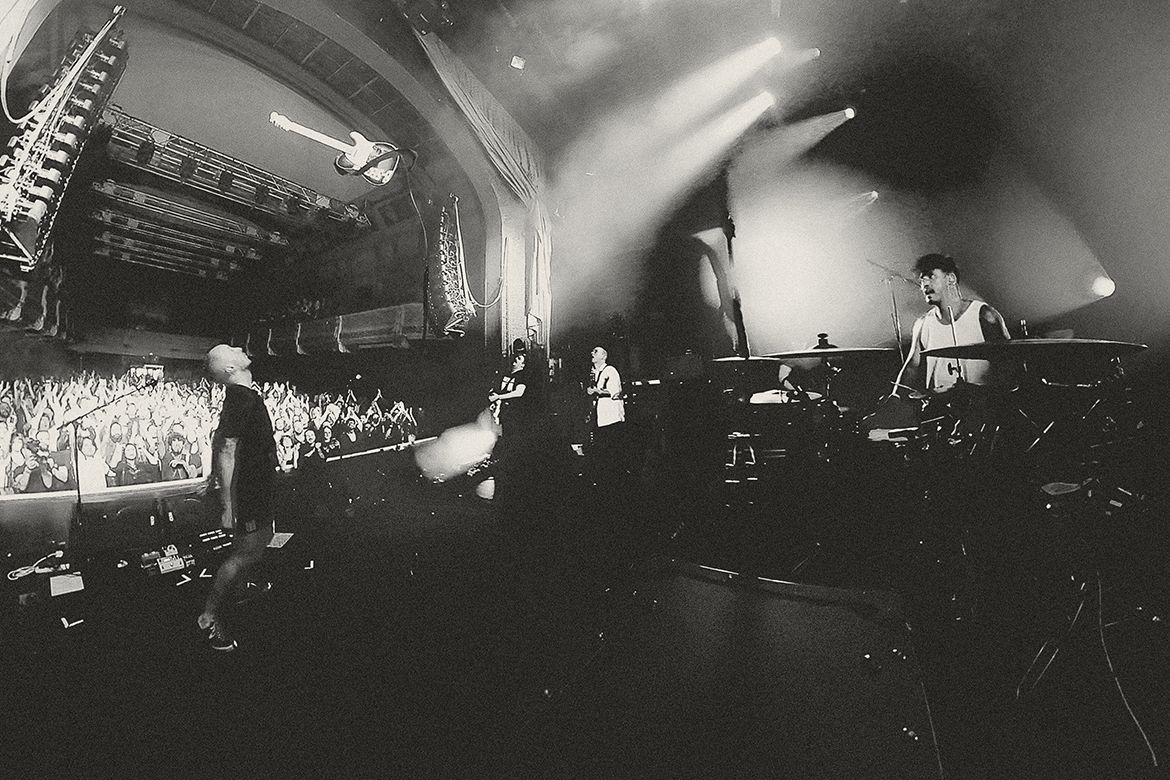
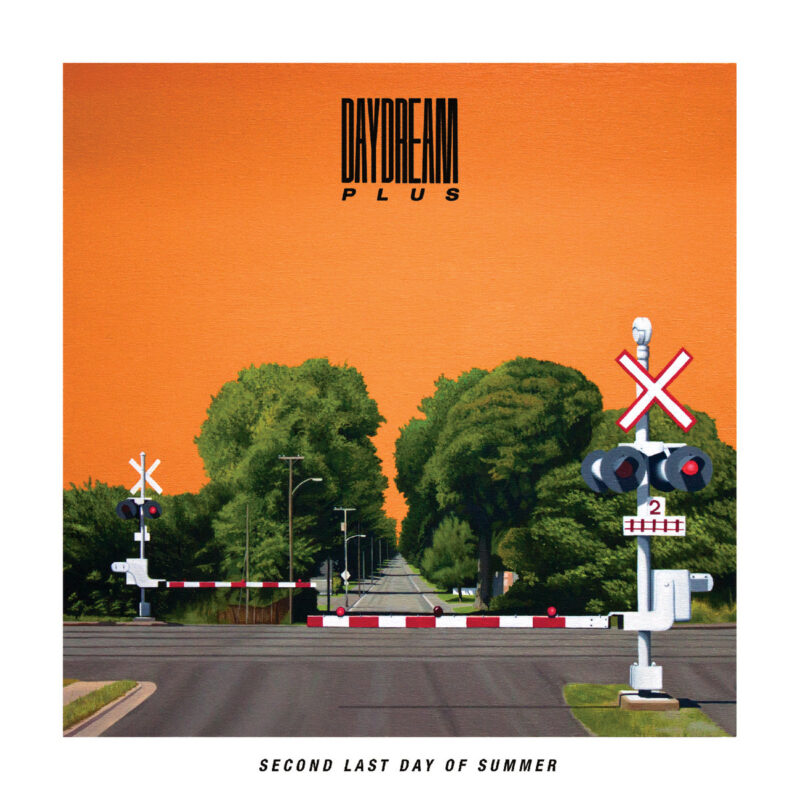
Daydream Plus can be seen as a sub-project of Tomb Mold, spearheaded by guitarist Payson Power and bandmates Max Klebanoff on drums and Kevin Sia on bass. Perhaps it’s the opposite of that band in spirit – this is the happy-go-luckiest sound this side of the Atlantic. It’s instrumental math and jazz rock begging to be the soundtrack to the season everywhere. Now they make the jump to long format, with the release of Second Last Day of Summer more than doubling the size of their discography in one swoop, backed by a strong label in Run to Cover. However, this leap in run time finds the project falling just short of its potential.
The format of the band remains true to their debut EPs, Clues Recalled From Memory and Escape At Your Own Pace. It’s ostensibly Power’s project, led by guitar leads in a constant state of noodling. Blurring the lines between ‘solo’ and ‘melody’, Power crafts instrumentals that you can almost sing along to (if you can keep up). The licks are fast and jubilant, dominating the record and becoming the whole character of Daydream Plus. The pointed lack of any overdubbing keeps the leads immediate and arresting.
There’s a definite retro video game sound that this imparts – imagine an early Pokémon theme, where technical limitations mean that at most one lead melody can jostle to be heard amid the bleepy chaos. The band warmly acknowledge such influences with an entire alt version of the record in a NES compatible cartridge. Power has stated that the simplicity of the Mega Man 2 soundtrack influenced this approach, where “songs are only 30 seconds long yet you never get sick of them”, and that melody should be the priority. His leads for Daydream Plus are certainly technical and definitely addictive. After a few spins of the album, the motifs of tracks like “Stiletto Flourish” or the opener “Tutorial” will be positively ingrained in the mind.
Whilst Power occupies the limelight and lays down the melody, the drumwork and bass also offer strong chops. Klebanoff is a joy to hear, injecting elements like burst beats and busy fills in places a typical fusion band wouldn’t. Tracks like “Hard To Destroy” and “Emergency Exit” are Klebanoff victories. The mix leaves plenty of room for Sia to strut his stuff, occasionally soloing on the likes of “Speed Limit”. This adds up to create consistently strong tracks, forming the bedrock of an instrumental record you don’t need a degree to appreciate.
With this format comes some strong caveats. The rhythm guitars are very, very understated for an album of this kind. They are almost a placeholder, strumming chords flatly; a first-pass that was meant to be embellished later. This is most egregious in the record’s opening moments, “Tutorial”, which significantly undersells the album in its first ten seconds. Yes, this is a three piece, so they are sticking to a simple approach to stay true to their studio sound, but next to the amazing detail of the leads, it’s a pulled punch.
The record could sound flat as a result of their formula, but puts in some legwork to inject variation. It wouldn’t be a jazz influenced record without some wind instruments, with features coming from American Football’s Steve Lamos on trumpet for the sombre close of “Nautical Twilight” and Destroyer/The War on Drugs’ Joseph Shabason on saxophone for “More Time Alone”. Electric piano contributed by Ryo Kishimoto (Fox Capture Plan) brings a tasteful solo to “Metropolitan Mirage”, and more piano gives the record’s second half a contemplative feel. The three interludes are all delicious morsels, each offering a simple melody that loop just twice, enough to make you yearn for more. Still, the resounding sound of this album remains that lead-driven instrumental sound. Across eight full-sized pieces of similar pacing, the latter tracks yearn for something that might invert this approach.
The closer is a moment that brings the format of Second Last Day of Summer under scrutiny, as “Wave Goodbye” struggles to impart a sense of finality. Perhaps it refuses – the very last lick is cut short, leaving us happy yet unresolved – but it’s also a great example of the limitations of the project’s formula. Something a little more ostentatious, stepping out of the studio-trio format, wouldn’t have undercut the personable style of the album. Ultimately, the band envisage this project as something to kick back to, representing simpler times without the pitfalls that surround nostalgia-soaked media. In this way, it’s certainly refreshing, if lacking in urgency. There’s no reason we can’t also make a truly timeless album in the process of kicking back, and Daydream Plus probably have it in them, but it’s not quite time yet.