
“My lover is the hanged man.”
‘Don’t talk about politics or religion’ is an adage that is not owned by British culture, but perhaps we do it best. The Anglican church is sliding from relevancy in everyday life, yet continues to work in many forms, many of those undoubtedly good, but all surely blighted by an atmosphere of polite disaffection. Perhaps that’s British culture’s ‘I’m fine’ problem surfacing, not unique to the church itself. But when society’s biggest problems involve speaking through to power, it’s going to take more than a post-sermon biscuit and tea in the church hall to find solutions. The church continues to fight to prove its relevance on a charitable level, yet the muddled communication on something that should be as simple as ‘letting women be bishops’ inspires no confidence from the outside.
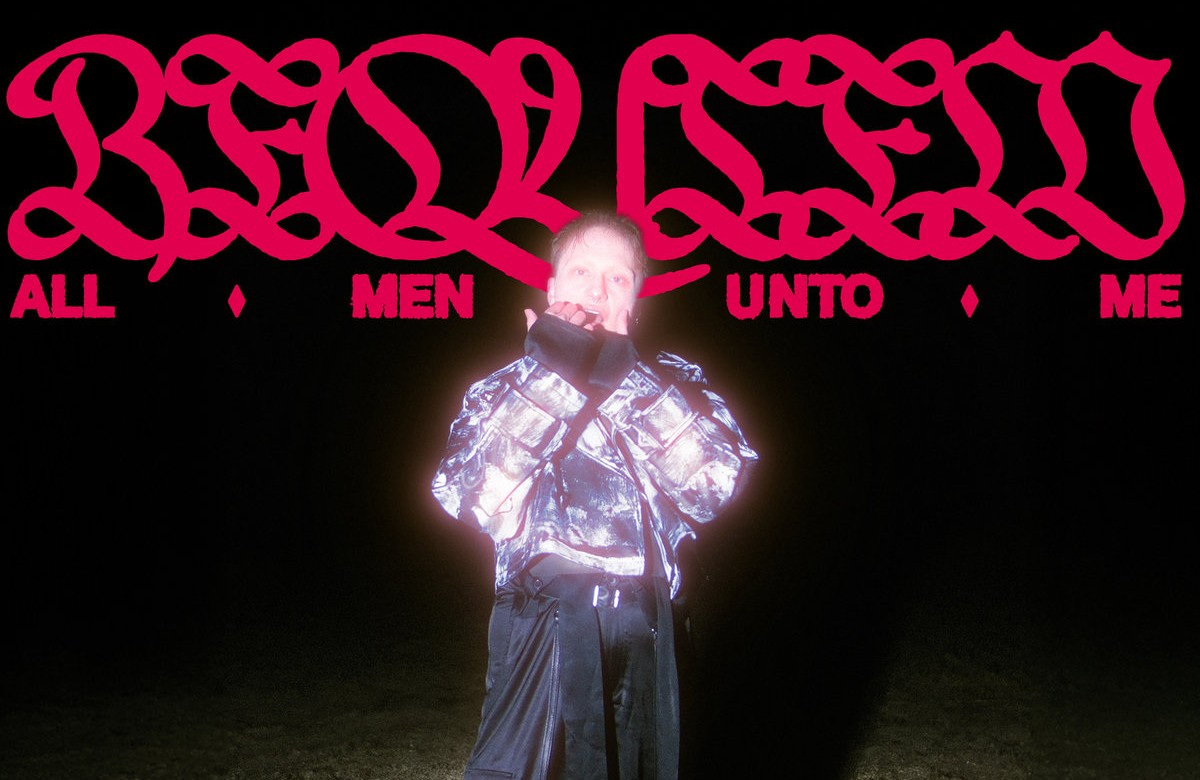
The extent to which the modern church is patriarchal is theirs to debate, but its past cannot be denied, and many will find that spectre to be quite convenient to practice under. The rest just have to live through it, which becomes the key inspiration for All Men Unto Me’s Requiem. Fronted by Rylan Gleave, All Men Unto Me seeks to unite his work as part of the radical anarchist metal band Ashenspire and the classical world. This is far from your typical metal-classical pastiche – Requiem is a challenging union where the boldest aspects of both genres make for deliberately awkward and triumphant company.
Lyrically, the record is a transposition of the traditional ‘requiem’. Each track is named after a part of the missa pro defunctis sequence, and they all dwell on death in a broad sense. Every emotion, from sadness to anger, is allowed to join in the process of grief. The lyrics are continually centred on God, perhaps in direct conversation with the divine, a quiet conversation with a friend, or by speaking with the disembodied voice of the church itself. It’s immensely heavy and compelling. The subject or subjects being mourned are ever shifting, and Gleave‘s own identity hangs in the balance as a further source of strife and triumph. His prior record In Chemical Transit was a literal document of his transition, and Requiem continues to explore transmasculinity in much the same way.
“INTROIT” opens the record with a moment of confrontation. Gleave voice is alone, staring us down as he invokes the wrath of God (“forgive him, Lord / on each day of your righteous wrath / for justice looks like death”). We feel his gaze transfixed upon us as the guitar chords begin to ring out, coarse and dissonant, discomfort underlined by twisted strings and rumbling electronics. The guitar continues to lead the track, and the oddness of the melodies harkens towards some of the most respected Avant Garde metal projects – Kayo Dot, Nucleus Torn, and Oranssi Pazuzu are hard not to mention.
Although it wasn’t a single, “SANCTUS” is the most direct and self-contained track on the album. A solemn, clean melody becomes a heavy motif that is primed to rings out again and again. The track has a structure that approaches the accessible, if not for its eight-minute runtime and pace akin to a dirge. Whilst it’s much more straight-up metal, the only breakdown is Gleave’s own, as “SANCTUS” finishes with a panicked and breathless panic attack over blast beats. Although the project involves multiple Ashenspire members (Scott McLean and Alasdair Dunn), Requiem offers a completely different vision for metal, leaning into doom and sludge in a way that compliments the chamber classical atmosphere.
The following tracks make most sense as a pair, one that balms after the other’s sting. “KYRIE ELEISON” sees Gleave’s voice drift above a barbarous organ, the ambiguity of its repeated lyric in tortured takes. His vocal command allows the delivery to be incredibly tender and affecting, as if hearing an amplifier crackle at the point of distortion. “PIE JESU” is “KYRIE ELEISON”’s foil, a gentle waltz back up to the light. Both tracks being positioned so early on in the record creates a large pause for the rhythm section. Whether you approach this from the metal or classical standpoint, Requiem’s willingness to be this dynamic is refreshing.
“SEQUENTIA” begins side two in a dark place with the noisiest track, underlined by a bass groove that is indifferent to Gleave’s growing anger. “ANGUS DEI” is another moment for the organ to shine, rendered in a way that emphasises the extremes of the instrument. You feel all the sharpness and urgency of the air exiting its pipes at full volume, and when quiet it’s barely even there. Following these two oppressive tracks, the remainder of the album provides release, first through “LUX ÆTERNA”’s uncertain atmospheres, then with “IN PARADISUM”’s silver linings. As the band closes the album with post rock drones, the only timing is provided by Gleave as he sings “justice looks like death / God only knows what I’d be without you”.
Discussions of faith are much more powerful if they admit vulnerability. The resonance of Reverend Kristin Michael Hayter (and Lingua Ignota) is proof of this, whose four records are full of darkness, humour, and direct challenges to God. Breaking away from the idyllic view of a relationship with the supreme is essential for making a piece of art that crosses boundaries, reminding us that the struggles of the faithful and the faithless may be mere lenses. Across Requiem, Gleave’s performance and songwriting are both beautiful and tortured, leaving the listener to wonder whether God’s name is being taken in praise or in vain.
8/10
Requiem releases on the 27th June through The Larvarium and can be pre-ordered here.