
“You’re forever a part of me”
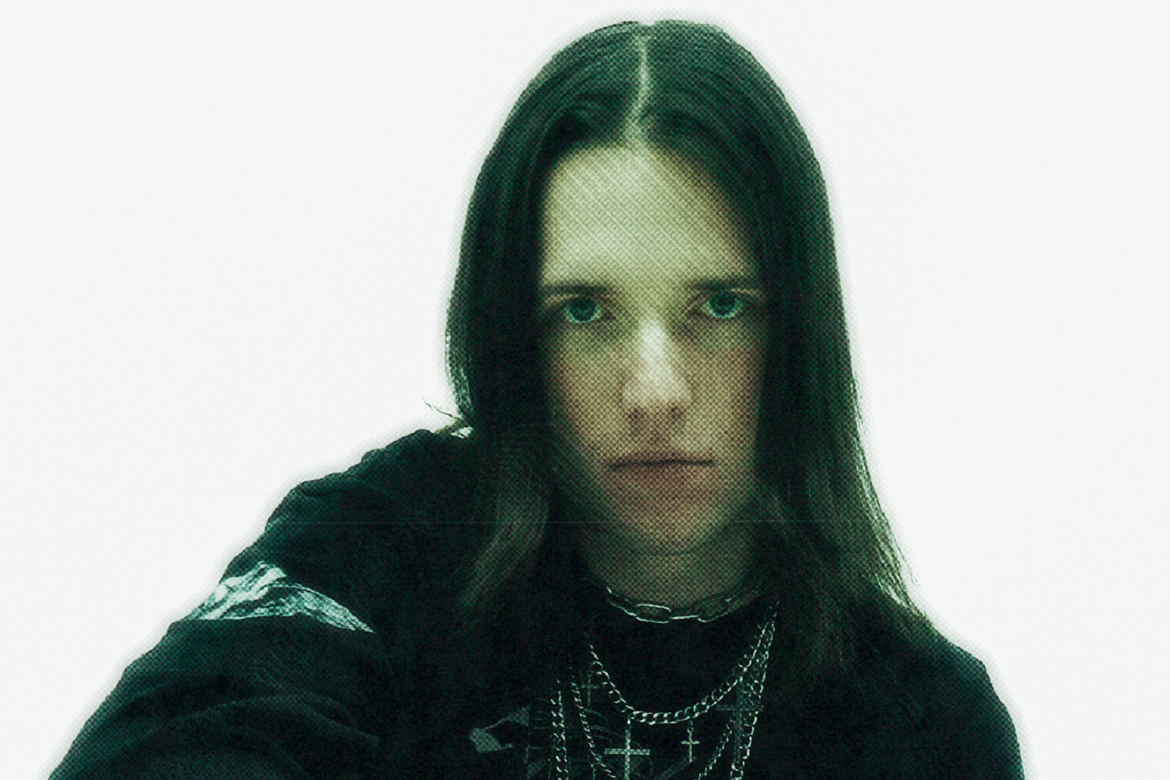
Over the past few years, Blind Equation has emerged as a flagbearer of cybergrind’s melodic, emotionally raw underbelly. With A Funeral in Purgatory, James McHenry, the sole force behind the project, delivers an ambitious sonic leap. In our conversation, we dive into the album’s darker emotional themes, unexpected influences, and how the underground scene’s DIY spirit continues to shape Blind Equation’s identity.
Powered by RedCircle
Fresh off a sold-out show in Grand Rapids, James reflects on the culmination of his latest tour with a quiet pride. It was Blind Equation’s first time playing the city, and the high-energy reception couldn’t have been a better way to cap things off. Now, the spotlight shifts to the newly released A Funeral in Purgatory, a marked shift from 2022’s Death Awaits. While the trademark speed and emotional depth remain intact, James trades chip-tune blast beats and Nintendo-core roots for a denser, more abrasive sound informed by nu-metal, black metal, and funeral doom.
“This one’s a lot heavier,” James explains. “It’s more accessible in some ways, but also more emotionally overwhelming. It’s not a continuation of Death Awaits, it’s something entirely new.”
The vocal direction on the album is immediately striking, raw, unfiltered, and uncomfortably human. James credits early Korn and Slipknot records as unlikely influences, citing the unrefined emotional delivery of Corey Taylor and Jonathan Davis on these releases.
“I wasn’t trying to emulate them,” he clarifies. “But revisiting those albums showed me it was okay to let things be imperfect. With such an electronic genre, you need something human.”
The imperfections, intentionally left in, add weight to the lyrics. “It’s the first time my vocal delivery fully matches the emotion behind the songs,” he says.
Though Blind Equation’s DNA is rooted in cybergrind, this record filters in layers of European black metal, ambient goth, and even post-rock melancholy.
“I’ve been on a huge funeral doom and gothic metal kick,” he admits. “I wanted all those aesthetics, the atmosphere, the melody, the melancholy, to bleed in without compromising the project’s identity.”
James rattles off inspirations from Cradle of Filth to My Dying Bride to Have A Nice Life. “Each album is kind of like a mood board of what I’ve been obsessed with musically,” he laughs. “But somehow it still sounds like Blind Equation.”
Despite its sonic abrasiveness, A Funeral in Purgatory is steeped in grief and vulnerability. It’s a thematic shift from the emotional/sonic contrast of past records.
“On Death Awaits, the music was playful and colorful while the lyrics were dark. Here, everything’s stripped down, no more hiding. The sadness is front and center.”
The album title emerged almost unconsciously. “It just sounded right,” James says. “Only later did I realize what it meant, a funeral suspended in limbo. It’s about grief without resolution. You don’t get closure. You just keep going.”
Tracks like “Mourn” and “Still” reflect this emotional paralysis. Ending the album with “Incomplete” underscores the unresolved pain. “It’s cyclical,” James adds. “You don’t get over it.”
One of the album’s many strengths lies in its guest features: Strawberry Hospital and JOHNNASCUS inject their own identities into the songs with complete creative freedom.
“I don’t just want big names, I want artists I trust,” James says. “Strawberry Hospital rewrote her section and added ambient layers I didn’t expect. Johnny from JOHNNASCUS even reprogrammed the drums for his section. It’s all about collaboration.”
Blind Equation remains fiercely independent. James still writes all the music, though for this release, he enlisted help with mixing from a friend connected to genre-bending heavyweights like Omerta. The collaborative sessions over Zoom brought a new sense of depth and polish.
“He helped make it breathe,” James says. “We’d sit on calls for hours, adjusting things like reverb automation or synth dynamics. It was still my vision, but now it sounded how I always wanted it to.”
Even the album’s aggressive “guitar” tones are distorted synths. “No real guitars. Just a bass synth cranked until it sounds like a chainsaw.”
One track in the middle of the album is titled only with a cross emoji. James calls it “just a cool-looking interlude,” but it plays a critical role in the pacing of the album, a moment of reflection between two of its most devastating songs, “A Funeral” and “In Purgatory.” Originally written at entirely different times for unrelated purposes, the two tracks found a natural flow when sequencing the record.
“Sometimes things just click,” he says. “The transition felt right. The themes aligned. So I let them speak to each other.”
Since the last record, Blind Equation has been nonstop. Tours across Asia, Australia, and the U.S. with the likes of Your Arms Are My Cocoon, and Stomach Book have helped grow the project’s reach far beyond niche circles.
James still handles much of the booking himself. “We don’t have a booking agent or management,” he shrugs. “These things just kind of happen through friends and community. Like that Singapore tour? Started from a random DM.”
Upcoming dates with Falling With Scissors only reinforce how connected this scene remains. “We just want to play shows with people we believe in,” he says.
So what’s next for Blind Equation?
“I don’t know exactly,” James says. “But I know I won’t go back to doing the same thing. Death Awaits was the end of one chapter. A Funeral in Purgatory starts a new one.”
If there’s one certainty, it’s that Blind Equation will continue to blur boundaries between genres, emotions, and expectations, all while staying radically true to its vision.