
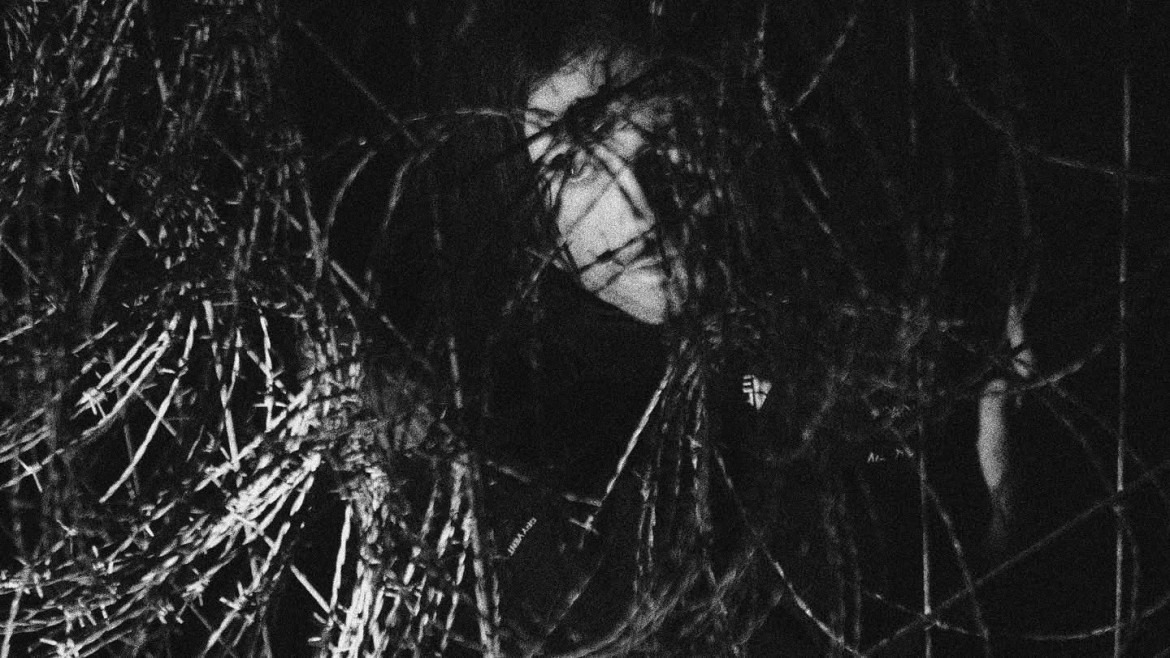
“I’m swallowing my fate, what’s left to change?“
Welcome to In Conversation, our interview column where we pick the brains of artists on the cutting edge of music. As Moodring prepares to release their highly anticipated album Death Fetish, Jack Walker and Shane C caught up with the band’s frontman, Hunter Young, to discuss the making of the record, his personal struggles, and the band’s evolution. With a raw, unflinching approach to both songwriting and production, Death Fetish is a powerful reflection of Hunter’s journey over the past few years. Here’s what he had to say about the album and his role in the wider music scene.
Powered by RedCircle
Listen on Spotify here and Apple Music here.
How are you feeling about the upcoming release of Death Fetish?
The blunt answer is that I’m just ready for it to be out. I’ve moved on from it and come back to it multiple times, so up until this week, it already felt like it was over. Now that it’s coming out, I’m re-immersing myself, and it’s been weird.
Are you nervous at all?
No. What I love from the record, I love wholeheartedly. Some songs on there I could probably do without, but they’re probably the ones that people will like the most. It’s weird, but no, I’m not nervous.
Does it feel like starting over due to the long wait for the album?
Yeah, it feels like starting over. I appreciate the people who waited patiently, but a lot of people have moved on. Five years might seem like a lot, but it’s only been three years, and I’ve done other things during that time, including two albums and a covers record.
Did your personal struggles influence the songwriting on this album?
I mean, look at the album title; it’s pretty straightforward. A lot of the songs are about being sick and struggling with suicide, or how it affects the people around me. It’s dark. There’s no silver lining. I just say what I need to say.
Why do you write so bluntly in your lyrics?
I was never a big metaphorical writer. I just want to say what I’m thinking, and maybe my songwriting suffers for that, but I just want to convey the point as clearly as possible. With Death Fetish, it works to the album’s advantage, but it also makes it harder for some people to relate to.
Do you think people will connect with the rawness of the album?
I think people will either connect with it or not. It’s hard for people to face health and mortality. It’s easier to embrace political music, but acknowledging your own mortality is a tough pill to swallow. This album forces that.
Were there any specific influences for this record?
The album is less influenced by the things people expect, like typical new metal bands. It’s more influenced by industrial metal, like Static-X, Fear Factory, and Spineshank, and darker elements, like Stain’s Dysfunction. People lump my work into new metal, but that’s not what I’m doing.
What about the vocal style on the album?
I got more confident with my voice after Your Light Fades Away, which carried into Death Fetish. I wanted to be able to use my voice more expressively – if something needed to sound desperate, I wanted to make it desperate. It wasn’t cathartic for me, but it was more about being unafraid to use every tool in my vocal arsenal.
How has the collaboration process been for this album?
Maddie (iRis.EXE) was involved in writing a few tracks like “Cold Metal Kiss” and “Masochist Machine.” Sean Dolich worked on “Half Life,” “Die Slow,” and “Cannibal,” and Aiden from PSYCHO-FRAME helped with bass on some tracks. But overall, it was mostly Austin and I working together.
How do you feel about the singles released for the album?
I think the singles were the wrong choice. “Half Life” was safe because the fanbase wanted it, but I regret releasing it early. “Cannibal” was released at the wrong time. If I could go back, I would’ve led with “Masochist Machine” and “Gunplay,” and definitely “Anywhere But Here.”
Why did you decide on “Half Life” as a single then?
It was mainly because people had been asking for it. But in hindsight, I think I should’ve made them wait for the album. Releasing it early took some of the anticipation out of it.
How do you decide what songs get released as singles?
It depends on the label and management input, but we don’t have management right now. I usually just go with what feels right for me. What I like musically doesn’t always align with what the average listener likes, so choosing singles is tough. “STFA” was the obvious choice for a single, but it’s not the song I relate to the most.
Is there a specific track you’re particularly excited for people to hear?
“Gunplay” is one of my favourites on the record, and I think people are going to like it. “Anywhere But Here” is another one I’m excited about. It’s one of the tracks I feel represents the band the best right now.
How does the album reflect your health and struggles?
The record was made with a human experience in mind. I wanted it to feel raw, real, and unpolished because I was going through a tough time physically. There were songs where I couldn’t have used simulated sounds, and I insisted on using real amps and real drums. I wanted it to sound real, even if it wasn’t the “perfect” production.
Does the sound of the album reflect your emotional state?
Yes. There’s a lot of contrast. Some of the softer songs are heavier lyrically, and some of the louder songs are just about having fun, like “Sick Fuck.” It’s an emotional rollercoaster, and it’s not easy listening.
Any thoughts on the Crunchyroll collaboration with “Cannibal”?
It’s a cool project, and I think it’s great that anime and music are crossing over more. But it’s still a test, and I hope it leads to more opportunities for other bands down the line.
What would you say your music is evolving towards?
I’m just continuing to push myself creatively. I don’t want to stick to formulas or be part of any specific scene. I just want to make music that feels authentic to me, no matter what label it gets.
If you had to summarise the album and why people should listen to it, what would you say?
Even if it’s not your usual type of music, it’s an authentic record that blends elements from the past, present, and future. It might not click on the first listen, but if you give it a couple spins, it could really grow on you. It might be a little early or hey, maybe twenty or thirty years late. Sometimes, you won’t fully get something on the first try, but years later, you might realise you missed out.
A huge thank you to Hunter for taking the time to chat to us. We’re huge fans of you and your many, many works, and it truly was a pleasure to sit and chat through it all with you. To hear the full conversation where we discuss PSYCHO-FRAME, Digital Ghost Audio and more, listen to the full audio above.
Death Fetish releases on March 27th via SharpTone and is available to preorder here.