
“How do you swallow the feeling of impending doom?”
With their latest album Mutilator, just passing its third anniversary, we caught up with Gatherer’s drummer, Adam Cichocki, to talk about the meaning of the record, the future of the band, and his other work as the owner of the extremely popular Timber Studios.
First off: Gatherers is gone?
Gatherers is a big question mark. It’s a tough thing to navigate. After releasing Mutilator, we were supposed to play the album release show. But Rich [Weinberger] had just come off a vocal injury, one of his vocal cords was temporarily paralysed. It never fully recovered.
We booked the St. Vitus show, thinking he was well enough. A few days before, he came to us saying he didn’t think he could deliver the performance the record deserved. So we postponed it. From there, everything fell into this weird hiatus. His condition was uncertain, tests were ongoing, life got in the way, and the band essentially went into limbo. None of us wanted to make a big Instagram announcement because we ourselves didn’t know what the future looked like.
We all have other creative projects, we’re all happy in our lives… and if Mutilator ends up the final Gatherers record, we’re proud of it. If it comes back in some form, great. If not, that’s okay too.
Listening to Mutilator, it almost feels like a cinematic ending, like a final statement. Was that intentional?
Not at all. Funny enough, Rich’s Instagram post referred to the tracks as “our last 11 transmissions,” and people freaked out. But that wasn’t meant as a “farewell.” It was just how he wanted to phrase it.
But musically? We’ve always evolved based on what excited us at the time. When Gatherers started in 2010–11, I had just learned how to play drums. Matt and I switched instruments because we wanted a fresh start after our old band.
Our early records (Postcards) were very “of the moment.” My drum vocabulary was tiny, influenced by Touche Amore, D-beat, and blasts. As we went forward (Quiet World, We Are Alive Beyond Repair), I grew technically, then later intentionally stripped things back to serve the songs.
By Mutilator, we were writing differently, sending demos, building more holistically, thinking about the macro view of the songs. The story-feeling of the album came naturally.
The band’s evolution feels very linear – like you can hear each phase building into the next. Was that intentional?
Kind of, but mostly it’s just how we work. We always write together in a room; no one brings in fully formed songs. Someone plays something cool, we latch onto it, and we build from that.
When Rich joined on Quiet World, everything shifted. His influences, Glassjaw, Thursday, Deftones, naturally shaped the band. My drumming got more technical because I finally could play more.
For We’re Alive Beyond Repair, I did the opposite; I simplified hard. That record was all about mood. And people connected with it. By Mutilator, writing via voice memos and demos changed everything again.
We never tried to reinvent ourselves for the sake of it; we just changed as musicians.
You mentioned Rich’s vocal struggles during Mutilator. How serious did it get?
Very serious. He went to multiple specialists, and no one could give a clear answer, node? paralysis? something else?
Two terrifying options came up:
- A temporary injection to plump the paralysed cord
- A surgical implant
Rich actually did the injection several times. Absolute bravery, I wouldn’t do it. It helped a bit, but not enough for long-term consistency.
That’s also why about 70% of the vocals on the album are from demo takes. Some moments were so raw and chaotic that we couldn’t recreate them. There’s charm in those imperfections, distortion, peaking, and handheld SM57s jammed against teeth. It’s all real. That’s why the record feels the way it does.
There’s a lot of weight and dread in Mutilator. Did all of that take a toll on you while writing it?
The funny thing is, I’m a super upbeat, bubbly person. So it’s hilarious that this is the record representing my musical journey.
But yes, the record is heavy because Rich’s lyrics are honest. They’re his world, his feelings. The rest of us just build the musical language around that. If you met us in the street, you probably wouldn’t guess we made Mutilator.
There are recurring characters and motifs across Gatherers’ albums. Is that deliberate?
Honestly, you’d have to ask Rich. We stay out of each other’s way. That’s why the band worked. Everyone trusted each other’s lane. I don’t tell Rich how to write lyrics. He doesn’t tell me how to play drums. Same for visuals, production, everything. Good bands know when not to have too many cooks.
So if there’s a narrative thread, that’s Rich’s doing, and I love discovering it with everyone else.
Let’s talk about the features on Mutilator: Geoff Rickley, Dan Lambton, Courtney Swain. Wild lineup. How did these happen?
Geoff Rickley – Total full-circle moment. My first hardcore show ever featured Thursday. Years later, Chris from No Sleep [Records] reached out, sent him the track, Geoff loved it, recorded his part at home, and sent it over.
Hearing his voice on our music was surreal.
Courtney Swain (Bent Knee) – We toured with Bent Knee for two months. Mid-tour, their drummer, Gavin, fractured his ankle. Courtney asked me and Billy Rymer (Dillinger Escape Plan) to fill in. I learned insanely technical songs in a day.
That tour changed me as a musician. We became close, so asking her to sing on the record felt natural, and she crushed it.
Dan Lambton – We toured with Real Friends in 2015. Dan’s energy is unreal. On Mutilator, we had this upbeat, almost At-the-Drive-In moment, and Dan was perfect for it.
He sent the part on my wedding day, and the guys left the wedding for a bit to listen to it.
No Sleep shutting down caused issues with the record disappearing from streaming. How did you get it back?
Complicated situation all around. But long story short: we now have full rights to the record again. We uploaded it ourselves.
Which leads nicely to the next question: What is KACF? We noticed the new copyright attribution…
It’s a hint at our new project: kissandcatchfire! Me, Rich, Siddhu (ex-Gatherers bassist now on guitar), and Andrew Archie on bass.
Rich can still do some wild screams, and more controlled singing. We’re writing music that fits what he can do now. It’s darker, chaotic, fast, screamy, very us. We’ve written basically a full LP already. Tracking has started. Whether it’s a full album or a slow drip of singles, we’ll see.
There’s no pressure. We’re older, we’re parents, we do it because we love it.
Timber Studios
How did Timber Studios come about, and what has the journey looked like? Who have you worked with along the way?
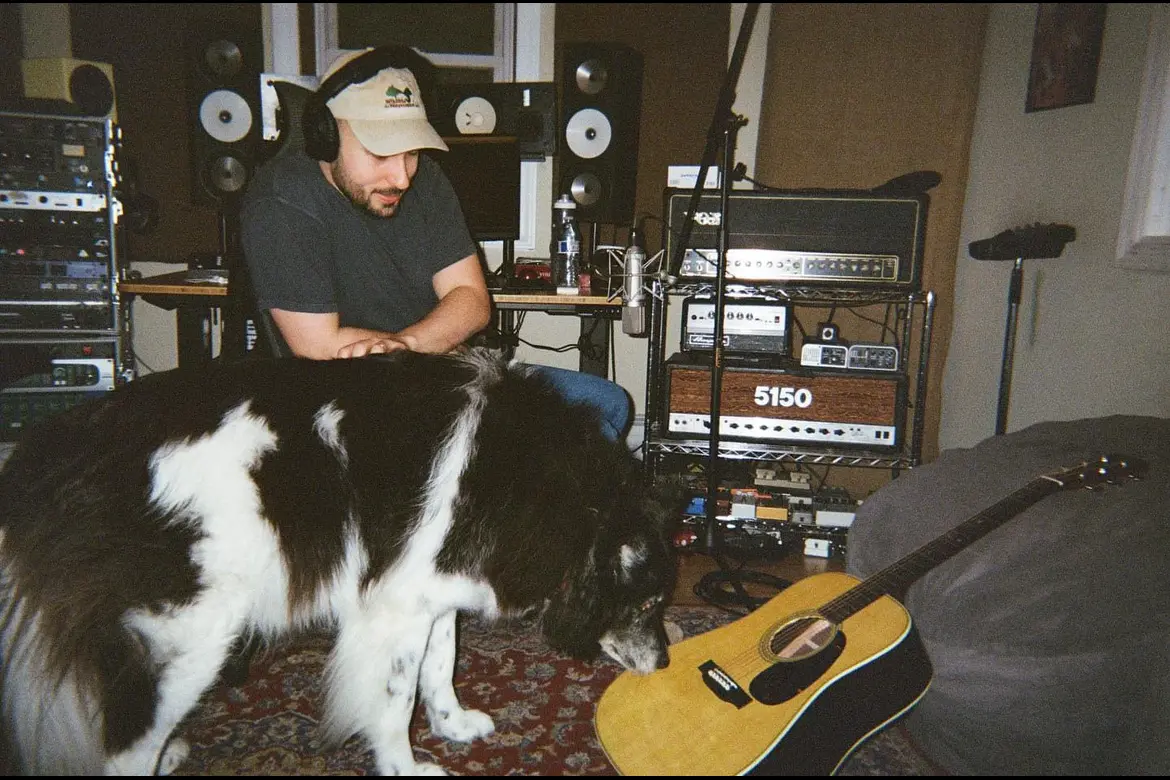
Timber [Studios] started out of pure necessity. Back in 2008, I was just a kid with an average computer, a couple of SM57s, and no idea what I was doing. I just wanted to know if my band sucked. I’d mic everything up in my parents’ basement and try to figure out why it all sounded like smashed cymbals. But friends started hearing the demos and asking me to record their bands, and it became this obsession. I have a very addictive personality. When I care about something, I have to get better at it inch by inch.
Over time, I was recording every local band that would show up at the house, then bands from out of state would travel in and crash in my parents’ basement while we tracked. Eventually, I moved the setup into a rented house with higher ceilings, then finally into the warehouse building in Bayonne that became the first real version of Timber Studios. My dad and some of his friends helped me build the whole thing from scratch. Now I’ve got two fully functional studios, a huge bombastic drum room, a tighter live room, writing rooms, live session setups, the whole deal.
You really kept the hardcore spirit alive: DIY, community, family involvement.
It’s inevitable. Hardcore is communal. Bands help each other. And that spirit carried into everything, building the studio, hiring friends, creating a space for everyone.
You’ve worked with a ton of bands there. Can you talk about some of the artists who’ve come through Timber?
There’s too many to list, honestly, I’ve been doing this since I was a teenager, but a few recent and notable ones come to mind.
- MouthBreather – I’ve worked with them a bunch, and through them I got involved in one of my favourite wild projects… They’re also coming back very soon to start tracking some new stuff which I’m really looking forward to.
- Six Months to Live – That’s some of the MouthBreather guys’ projects with Jordan (drummer from Fromjoy). They flew in, tracked drums here, and we reamped everything through real amps. Jordan literally brought sheet music for the drum parts. In this genre, you don’t see that often. We ended up projecting his notation onto a 60-inch TV because the paper was too small to read while he played. Total chaos, super fun, incredible musicians.
- Soul Blind – Jon [Markson] and I worked on their latest LP together. They came in with most of the record written, and we helped shape and finish songs. One of the best collaborative experiences I’ve had.
- Fit For a King – I’ve done some songwriting sessions with Tuck. He’d send me an acoustic and vocal, and I’d write riffs or flesh them out. Total trust and fluidity.
- I Promised The World – I worked on a young heavy band’s EP that ended up being a full-circle moment for me, because Rise was the label when I was 14, playing VFW shows. That EP was me and Jon working in both Timber Studios at once; I’d track bass in one room while he tracked guitar in the other, bouncing ideas back and forth.
Honestly, half my job is problem-solving and making the environment inspiring. Not to sound arrogant, but the audio part is the easy part now; the hard part is helping a band perform at their best, keeping the creative energy up, and giving each record its own unique fingerprint.
When you’re working with these bands, do you tend to fall into writing with them and tweaking things, or do you try to stay out of that and just offer advice?
I think everyone’s different. Every project is different. You have to be malleable to whatever people need. Some artists have everything down to a science; they know exactly what they want. If they bring you in for your expertise, that’s it. You don’t push; you just offer value where it’s needed.
If your involvement naturally seeps into other areas, that’s fine. But there’s no reason to force yourself in. There’s enough music being made, enough bands out there. You do what people ask of you. Sometimes that means being as hands-on as another band member; sometimes it’s just providing slight tweaks to perfect what’s already great.
For example, on the Soul Blind record, most of the album was written, but in the last day of pre-production, we worked on a song together. Later, the band wrote one more on their own, and it ended up being one of the coolest songs on the record. It’s about being part of the organic process, problem-solving, helping finish songs, or enhancing what’s already there.
So it’s really about adapting to whatever the project needs?
Exactly. Sometimes it’s a lot of involvement; sometimes it’s very little. Even mastering a mix can require restraint; knowing when not to overdo things is part of the value you bring.
That ties back to problem-solving, which you were saying about production, making sure setups and recordings work.
Yeah. The audio side isn’t the hard part anymore. Getting a kick drum or vocal to sound good? That’s almost invisible at this point. What really matters is making sure everyone is performing and being creative at their best. 70–80% of my focus is on the vibe, the ideas, and ensuring each element has its own fingerprint.
Every guitar tone has been made; every snare sound has been heard a million times. The only way to be unique is to push the envelope, add something unexpected, or create space for creativity. My role is to make the audio seamless so the band can focus on their ideas.
So it’s also about fostering collaboration in the studio?
Absolutely. You never shut people down for a “stupid” idea. Sometimes that idea ends up being the coolest part of the record. On the Gatherers’ record, for example, Rich had a vocal glitch idea in Black Marigold. At first, it sounded odd, but it became one of the most interesting moments. It’s about humility and rolling with whatever genuinely works.
Any advice for anyone coming into this sort of work, either as an artist or on the production side?
Explore. Make mistakes. Write bad songs. Flex your creative muscle. I remember reading that Ben Gibbard (Death Cab For Cutie) once wrote a hundred songs and slimmed them down to ten. You won’t know what your best work is until you keep creating.
Don’t limit yourself to the minimum. If a band wants three songs, I say to come in with six; they might have something incredible that’s not immediately obvious. Even in comping vocals, I make artists do multiple takes to capture emotion and nuance. Prioritise your art and give it your all, don’t phone it in. Over time, you learn how to craft music that moves people, makes them feel something. Whether you’re producing, writing, or even reviewing music, it’s all about perspective, care, and honesty.
You can hear the full, unabridged interview with Adam below.
Powered by RedCircle
Thank you for taking the time to talk to us, Adam. We truly appreciate it. On a personal level, Mutilator is a record that means an awful lot to me, and it was truly amazing to get to discuss it and learn more about its inception. Thank you.